
There’s a Lot of Noise About Children’s Dental Care
I’ve seen a lot of noise online about dental care in babies and children, so here’s the reality based on evidence—not opinion.
Tooth decay isn’t caused by gentle brushing. It’s caused by bacteria, sugars, and time.
What the Dental Guidelines Actually Say
Current guidance from organisations like the British Society of Paediatric Dentistry is very clear:
- Start cleaning teeth as soon as they appear.
- Use a small amount of toothpaste.
- Brush twice daily—after breakfast and before bed. Last thing at night is essential.
This applies to children—and the same principles carry into adulthood. And, to be honest, these recommendations have been in place for decades, so this isn’t some new guideline that has suddenly appeared.
Should You Rinse After Brushing?
The advice is to not rinse the mouth with water after brushing the teeth.
I personally prefer to rinse the mouth with plenty of clean water after brushing and did that with my own children.
The important thing is effective cleaning and removing plaque from the tooth surfaces while following appropriate dental guidance.
What Actually Causes Tooth Decay?
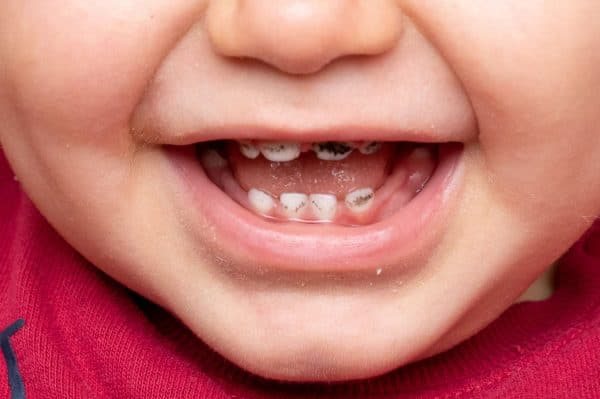
What we’re actually seeing is high levels of preventable decay in young children.
This isn’t from “over-brushing”—it’s from inconsistent oral hygiene, frequent sugar exposure, and lack of early care.
Tooth decay develops when bacteria in dental plaque use sugars to produce acids that attack the tooth surface. Repeated exposure over time increases the risk of decay.
Sugar is therefore an important part of the picture—but so is how often teeth are exposed to it and how effectively plaque is removed.
Parents Have an Important Role in Children’s Dental Health
I am retired from dental medicine, but my daughter works in dental medicine. Every day she comes home telling me how children’s teeth are in bad shape because parents don’t know the guidelines or, sadly, don’t always follow them.
Young children simply don’t have the dexterity to brush properly, and they don’t yet have the awareness to understand the importance.
That responsibility sits with the parent.
Why I Brushed My Children’s Teeth Until Around 11
In my own case, I brushed my children’s teeth until they were around 11 years old.
Not because I was being excessive—but because prevention is easier and better than treatment.
My children are now in their 20s and, so far, neither has had a filling or cavity.
Of course, every child is different, and good dental habits don’t guarantee that someone will never experience dental problems. But establishing consistent habits from an early age gives children the best possible foundation.
Sugar Is Everywhere
We’re seeing more decay in children not because of “over-care”, but because of inconsistent care and frequent sugar exposure.
Sugar can be found in obvious treats and drinks, but it can also be present in processed foods and foods that may not immediately seem sugary.
The issue isn’t simply whether something is labelled “natural”. From the perspective of dental health, what matters is how frequently teeth are exposed to fermentable carbohydrates and whether good oral hygiene is maintained.
Breast milk also contains natural sugars, which is one reason why maintaining appropriate oral hygiene from the appearance of the first tooth is important.
Why Baby Teeth Matter
Baby teeth matter.
They help children eat and speak, and they help guide the developing adult teeth into the correct position.
When significant decay is neglected, it can lead to pain, infection, difficulty eating and, in some cases, extractions. Problems with baby teeth can therefore have consequences beyond simply losing a temporary tooth.
What About Tooth Decay in Adults?
For adults, the story is much the same: prevention is always easier—and usually cheaper—than treatment.
Regular brushing, appropriate fluoride toothpaste, sensible management of sugary foods and drinks, and regular dental care all form part of preventing dental disease.
You don’t have to agree with everything you read online—but dismissing professional guidance doesn’t change the biology of how tooth decay develops.
Evidence-Based Dental Care Matters
I’ll personally continue to follow evidence-based dental care—for both children and adults—because prevention isn’t a “theory”. It is based on well-established understanding of how dental disease develops.
If you’re unsure about your own dental health or your child’s teeth, speak to a qualified dental professional rather than relying on social media debates.
Social Media Advice Isn’t a Substitute for Dental Care
I can assure you that some of the arguments I heard today—such as “my female divine self and materialist view of Descartes has an impact on our health”, or an Indian man telling me that teeth don’t need cleaning and that we should “just eat raw food”—are not going to stop tooth decay.
There is nothing wrong with exploring different perspectives on health.
But when it comes to preventing tooth decay, common sense needs to be supported by an understanding of dental biology and good evidence—not simply by something that sounds philosophical, natural or convincing on social media.
Can Tooth Enamel Remineralise?
There are approaches that may support the remineralisation of early enamel changes, particularly when mineral loss has not progressed to a cavity.
However, this is precisely where I would encourage caution.
The question is: how long does someone wait for remineralisation before allowing further damage to occur?
If you are concerned about enamel loss, early decay or changes to your teeth, regular dental examinations are important so that progression can be monitored and appropriate treatment recommended when necessary.
I would not rely on any homeopathic or natural approach as a substitute for professional dental assessment where decay is suspected.
Genetics Can Play a Role Too
Tooth decay and periodontal disease can also be influenced by individual susceptibility and genetics.
Some people may be more prone to dental problems than others, regardless of how carefully they look after their teeth.
But that makes consistent, proper dental care even more important—not less.
You can’t control every factor affecting your oral health, but you can control many of your daily habits.
Prevention Is Better Than Treatment
Prevention really is so much easier than treatment.
All the noise online I read yesterday was comedy gold, though.
The person going on about “my divine feminine self and Descartes’ materialist view” affecting her teeth had me crying laughing.
Darling, your spiritual awakening isn’t going to remineralise enamel.
And the Indian man confidently saying “just eat raw food, no need to brush” — yeah, good luck with that.
Raw food diets haven’t exactly eradicated dental problems throughout history.
Common sense and actual research over vibes and raw-carrot manifestos any day.
At the end of the day, you don’t have to follow every opinion you encounter online. But when it comes to your teeth—or your children’s teeth—understanding the evidence, establishing good habits early and seeking professional dental care when needed is a far better strategy than leaving your oral health to social media trends.
Read my article “Homeopathy for Holistic Dental Health”