
About Homeopathy
If you’re reading this, you might already know a bit about homeopathy. But if you’ve just landed here or want to learn more, keep reading!
Did you know…?
– Homeopathy has been practiced for over 200 years.
– Until recently, NHS hospitals referred patients with conditions like eczema and migraines—cases deemed “hopeless”—to homeopathic hospitals, where 70% of patients reported positive results.
– During the 1854 London cholera epidemic, the London Homeopathic Hospital had a mortality rate of 16.4%, compared to 53.2% at the non-homeopathic Middlesex Hospital. It was later revealed that the conventional medical establishment suppressed these results.
– Over 500 million people worldwide use homeopathy regularly. In India and Brazil, it’s integrated into mainstream healthcare with dedicated hospitals or hospital departments.
– In Switzerland, a thorough government review found homeopathy effective, leading to its inclusion in medical insurance coverage.
First, What Homeopathy is not?
The word homeopathy has the prefix “home” in it and it gives the impression that homeopathy is synonymous with home remedies, food supplements, herbs, teas but it has nothing to do with those. I have seen people mistakenly equate homeopathy with various alternative healthcare practices and practices such as:
Herbalism, Bio-Scanning/Bio-Ressonance machines or aerials, Muscle Testing, Kinesiology, Suplements or Vitamin therapy, DesBioTM and its likes , Allergy Testing, CBD oil,Colloidal Silver, Naturopathy, Chiropractice, Osteopathy, Cranial Sacral Osteopathy, Colonic irrigation, Aromatherapy or eesential oils, etc – the list goes on.
However, homeopathy is none of these listed above. So,
What is Homeopathy?
Homeopathy is a department of science of general medicine. It is specialised branch of general medicine that uses ultra-low-dose remedies to activate the body’s innate healing mechanisms—without harmful side effects. It is a holistic system of treatment designed to support the body in restoring balance and overall health.
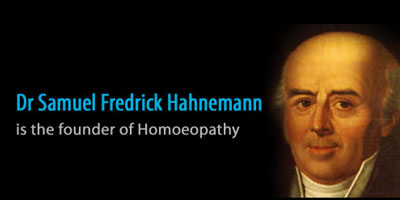
The origins of homeopathy trace back to 1796, when German physician Dr. Samuel Hahnemann founded the Homeopathic School of Medicine. Hahnemann is recognised as one of the foremost pioneers of scientific and medical thought. Through his research, he discovered a fundamental principle of homeopathy: “like cures like”—the idea that substances capable of causing symptoms in a healthy person can, when highly diluted, treat those same symptoms in someone who is unwell.
Homeopathy is now over 226 years old and is the second most widely used medical system in the world. It is estimated that over 500 million people globally use homeopathy as part of their healthcare approach.
Homeopathic remedies are prepared through a process that dilutes and energises substances derived from natural sources—mainly plants, minerals, and occasionally animal products. This method neutralises any toxic effects of the original substance while preserving its healing properties.
For example, a remedy made from onions (Allium cepa) is commonly used to treat symptoms such as watery eyes and sneezing—the same symptoms onions provoke when sliced. An interesting fact – to date, there are over 8000 homeopathic remedies in homeopathy. Homeopathic remedies cannot be patented.
Unlike conventional medicine, which often focuses on treating specific diseases, homeopathy treats the person as a whole. Each remedy is selected based on a detailed understanding of the patient’s physical, mental, and emotional state, as well as environmental influences. This individualised approach is central to homeopathic practice and is assessed during a comprehensive consultation.
Homeopathic medicine takes a completely different approach to disease and treatment compared to conventional or ‘allopathic’ medicine. It can be practiced by qualified healthcare professionals, including doctors, dentists, and veterinary surgeons. Additionally, it can be safely used at home ( with a bit of training ing) and many individuals opt for this method for common, acute and self-limiting family health issues, often using a homeopathic ‘first aid kit’ or remedies purchased from health stores and pharmacies.
In contrast, conventional or allopathic medicine addresses diseases and their symptoms with ‘anti’ drugs – you might recognize terms that refer to ‘fighting’ disease or ‘killing’ pain. Homeopathy, on the other hand, views symptoms as the body’s way of attempting to heal itself. It treats a person based on a unique set of symptoms rather than simply combating a disease in general. In essence, the symptoms determine the suitable homeopathic remedy.
Homeopathy is a gentle, safe, and effective natural medicine suitable for various conditions, honouring each person’s unique individuality. It promotes deep, lasting healing on physical, mental, and emotional levels. As a holistic approach, homeopathy treats the whole person, not just the disease or the disease name/diagnosis.
Homeopathic medicines come in various forms, including tablets, pillules, granules, and liquids. They are typically administered under the tongue, ideally when the mouth is clean. Remedies should be handled as little as possible, and patients are advised to avoid strong stimulants such as coffee, mint, and alcohol during treatment to ensure optimal effectiveness.
Prepared by trained pharmacists, homeopathic remedies work by releasing the energetic potential of the original substance, which then stimulates the body’s self-healing response. When prescribed properly by a certified professional, homeopathic treatments are considered safe for all, including infants, pregnant women, and even pets.
Homeopathy offers a gentle, natural, and effective path to healing—working in harmony with the body to relieve symptoms and promote long-term health.
Is there evidence to support Homeopathy?
There is more and more evidence supporting homeopathy, including the backing of prominent scientists. Please refer to the Homeopathy Research Institute – HRI.
Do homeopaths have medical training?
Registered homeopaths have to study for four years to qualify. Courses include anatomy and physiology, medications, pathologies, etc…. Homeopaths are bound by a strict code of ethics. If you choose a homeopath who is registered with a professional association, such as the ARH, you can be assured that he or she has a strong educational background.
Homeopathic Remedy Preparation
Watch this video from Helios Pharmacy, a homeopathic pharmacy in the UK, demonstrating the meticulous process of making remedies.
REASON FOR CHOOSING HOMEOPATHY:
No crude drugs are used in Homeopathy; homeopathic medicines are prepared through a special process and tested on human beings.
A very minimal quantity of medicine is required.
One medicine can serve various purposes.
In many cases, a single dose is sufficient.
There is no bitter taste as in other forms of drugs.
Sweet pills attract children, helping mothers give medicine at the proper time.
It is easy to administer; in unconscious patients, inhalation alone may be sufficient to produce an effect.
When the correct similimum is given, it acts faster than medicines of other systems.
Results may sometimes be observed within a few seconds.
It helps bring equilibrium and coordination within the body.
In some acute common cases, recovery may be observed within one or two days, whereas in other systems it may take longer.
The detailed case-taking procedure aims to understand the patient as a whole.
When a patient seeks treatment for one disease, he or she may also benefit from improvement in other unmentioned conditions.
It is non-addictive.
There is no drug dependency.
It helps boost immunity.
There are no side effects, only beneficial effects.
It can act as a preventive.
Tendencies or proneness to certain diseases can be checked under chronic treatment.
Medicine may sometimes be selected simply by observing the patient, without extensive questioning.
Homeopathic doctors emphasize long-term benefits rather than only short-term relief.
Patients may tolerate short-term suffering for long-lasting relief or cure.
Cure may be possible in Homeopathy, without shifting disease from one part of the body to another.
Treatment can begin even before diagnostic procedures are completed.
Medicines may be taken alongside other forms of treatment.
Some post-surgical discomfort can be reduced.
Where cure is not possible, the patient’s vitality may be improved.
In old age, when there is multisystem damage and the patient cannot tolerate other forms of drugs, Homeopathy is generally well tolerated.
Offspring may benefit when medicine is given to the pregnant mother.
It is a cost-effective treatment. For mental symptoms, Homeopathy offers gentle relief without side effects.
Yearly ailments/suffering and frequency of attacks can be reduced, making conditions non-recurrent.
In cases of irreversible pathological changes, quality of life may improve.
Medicinal aggravation naturally subsides over time in most cases.
Only internal remedies are generally used; external remedies are applied in very few cases with justifiable grounds (such as cuts, burns, or wounds).
It is gentle and environmentally friendly, with no issue of medical waste products.
In terminally ill patients, when survival is unlikely, Homeopathic palliative treatment may provide a painless and peaceful death.
It helps patients adjust according to their capacity to maintain life.
Homeopathy is a hope when there seems to be no hope and when other medical systems offer no answers.